Showing posts with label Yasyf. Show all posts

Saturday, June 11, 2011

Scam, Fraud, and Pink Bananas

⇐ Yes, that is a pink banana. Welcome to the world of the unrelated. On a completely different note, let's talk about how not to get ripped off!

In today’s world of social networking, internet marketing, and borderline-addictive cell phone use, there is an extremely large issue plaguing us. This is, of course, the issue of rampant frauds and scams on the internet. Today, I'm hoping to give you a quick guide to see past all the rhetoric (and sometimes outright lying) that you see while casually surfing the interwebs. To begin, there are some prime examples of internet scams. For the latest an greatest of these rather amusing ploys, see here. A few personal favourites are: one starving, cancer-ailed Valentin Mikhailin, the guy stuck in the middle of nowhere that desperately needs a cab (but can still somehow email thousands of people), and the guys at Microsoft that decided they wanted to hack your computer.

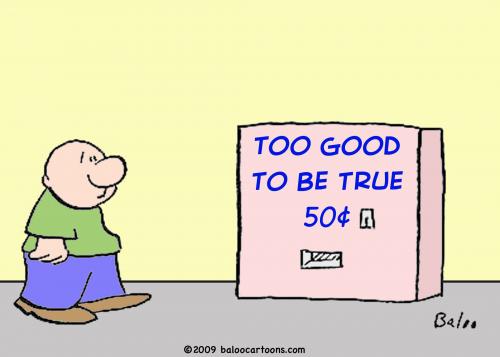
Now the first piece of advice anyone can give, but yet seems to be the most ignored, is to use your common sense! Come on people, how many Nigerian Princes do you know that really want to throw millions of dollars at you for no particular reason? Or in that case, anyone who would do that! The golden rule is to remember: nothing in life is free. Make sure to analyze those emails carefully, and think if anyone would ever actually give you what they are claiming to. As well, think about it from a business perspective; how is this company benefiting or making money of this? If you notice a major discrepancy in this, such as being offered a large gift, and the only catch being you have to send a sum of money to them (they make a profit off this money, and you might not even get your ‘gift’), then be wary of scammers. Finally, remember that if it sounds to good to be true, it probably is.
All of this covers those legal companies who deceive you into letting them make a large profit, but what about those who don't play by the rules (however vaguely)? This, Ladies and Gentlemen, is what you have to watch out for! There are some not-so-nice people out there who disregard the law and will do anything to earn a quick buck. The interesting thing about these people is that they tend to be people who have fallen for get-rich-quick schemes, are experienced, and now target
people who are desperate for money. This is scary, as it means these perpetrators of fraud are really good at what they're doing! There are three main things you have to watch out for while going about your everyday lives to help with this.

The first is constant vigilance when making purchases online. Check that the site you are at is really the site it claims to be, and not some 'phishing' site that is trying to steal your credentials. As well, make sure you get to know your seller. Meet them in person (if possible) in a public location, such as a bank. If this is not possible, then do your research! Look at their history, ask for references, and make sure you get your deal in writing.If all else fails, it might be wise to look for an alternate, more credible buyer.


The second thing is to make sure you know the contact information of your local fraud authorities, for example the RCMP Fraud Department, or RECOL. If you feel like someone is scamming you, committing fraud, or otherwise breaking the law online, it is your responsibility to report it.  Contrary to popular belief, the RCMP/Government/CIA is not some omniscient online being that can monitor anything and everything that happens. If you don't report it, nothing can be done, and you may be further endangering other people!

The third is to exercise your options! Almost all online commerce sites, such as eBay, offer buyer protection programs. Make sure you familiarize yourself with the company's policies, and how to file a complaint. Be sure to obtain all of this information before-hand, and consider using a middle-man service to ensure both parties get their fair share. And remember, if it seems too good to be true, it probably is, and there are always lots of other options.

Tuesday, May 10, 2011

Irrelevant Considerations: The “Science” Behind Them

Irrelevant Considerations. That's the topic today folks, so first of all: what the heck are they? Defined in the official dictionary of Princeton University, something that is irrelevant has "no bearing on or connection with the subject at issue", and a consideration is "information that should be kept in mind when making a decision". Therefore, we can assemble that an irrelevant consideration is something that has no connection with the issue at hand, but is still used as important information to out decision-making process. Now this can be anything from people who just 'know' that someone is lying, to techniques that claim to read a person like a book, based on the colour of their shirt. Today, we're going to look at some of the "science" behind these claims, and determine how accurate they really are based on our own common sense, irrelevant or otherwise.

The first claim I found interesting was the completely unbiased, not-looking-for-a-profit, purely-science-and-facts-based writers at Forbes, who "teach" people to tell if someone is lying, based on certain 'tricks' in their face-to-face behavior. One might think that you merely need to be perceptive to master this method, but at the speed that everyday conversations move, you'd have to be someone of superhuman reflexes to "look for slight signs of dilated pupils" during brief glimpses of suspicious retellings. And even if this were possible, the author herself admits that "Psychologists who study deception... are quick to warn that there is no foolproof method". Well there goes my faith! Any "proven method" of using unrealistic skills to do something not even the experts in the field believe in is total garbage (link, bullshit) to me. Don't trust me? See the studies of a one Bella DePaulo, professor of psychology at University of California, Santa Barbara (cited in the article). No matter how hard you concentrate on someone's ever-so"slightly elevated pitch", or observe the "length of speech pauses" down to the millisecond of your subject, you wont accomplish much more than a vague idea of their ulterior motive, depending on how the 'liar' is feeling. To quote the expert: "Lying is not a distinct psychological process with its own unique behavioral indicators. It does matter how liars feel and how they think."
Man Wearing Red

The other claim I thought I would focus on is the so called "colour science" (color for our American friends). And no, I don't mean chromatics, the actual scientific studies behind the material properties of colours, and how to qualify them; I'm talking about those out-to-lunch coo-coos slightly mentally unstable individuals that believe the colour of your shirt on a given day exposes your innermost secrets! Now to begin with, I'd like everyone reading this to stop and think for a minute. When looking at a ridiculous claim such as the one presented to us here, it is always best to first ask ourselves if any of the given information conflicts with our previous experience, and background knowledge. I don't know about you, but I have never, ever felt either a "strong sexual passion" or, alternatively, somehow been terribly intimidated by someone simply because they are wearing the colour red. I can assure you that most people would not be attracted to this (in a red cardigan, or otherwise). What about some of the other colours? White: extreme cleanliness, yet my brother's white shirts would tend to disagree. Blue: Trustworthy and warm personality, but Charles Ponzi loved it! Green: Worn by people of a compassionate and relaxing nature, also happens to be the colour that the antagonizing Green Men of the Vancouver Canucks happen to wear when they wish to rile up opponents. Must we go on?

Now let's look at some of the "science" behind these claims. First things first, the source. Neither of these claims are posted by a doctor with a Ph. D., in fact, one is merely a reporter for Forbes, on anything from privatizing native lands to good hiding spots. There is no research or studies to back these claims up, no experiments to prove beyond a shred of a doubt that they cannot be false... not even a girl with a video camera walking around analyzing clothing clouds and their effects on personality. Nothing! One would think that something as sure as colour-scicence would have lots of hard evidence to claim something outrageous, but it is all just speculations from an irrelevant source. Not only that, but our common sense tells us that our close friends do not change their mood (or perspective on life), based on their quirks, or clothing colours!

The point is, these claims have absolutely no science behind them whatsoever. They cannot be tested, have no experimental data behind them, come from uneducated and irrelevant sources, and cannot be proven through the scientific method. So always remember, while some coincidences may occur, with our current scientific data, and the lack of evidence and credibility behind these claims, there is no way you're ever going to read that one elusive captor's mood, based on the colour of their hoodie. If you still believe in this stuff, I really think you need to give this a read over.

Tuesday, March 1, 2011

Is there anyway to scientifically prove the idea of “Intelligent Design”?

Question: Is there anyway to scientifically prove the idea of “Intelligent Design”?

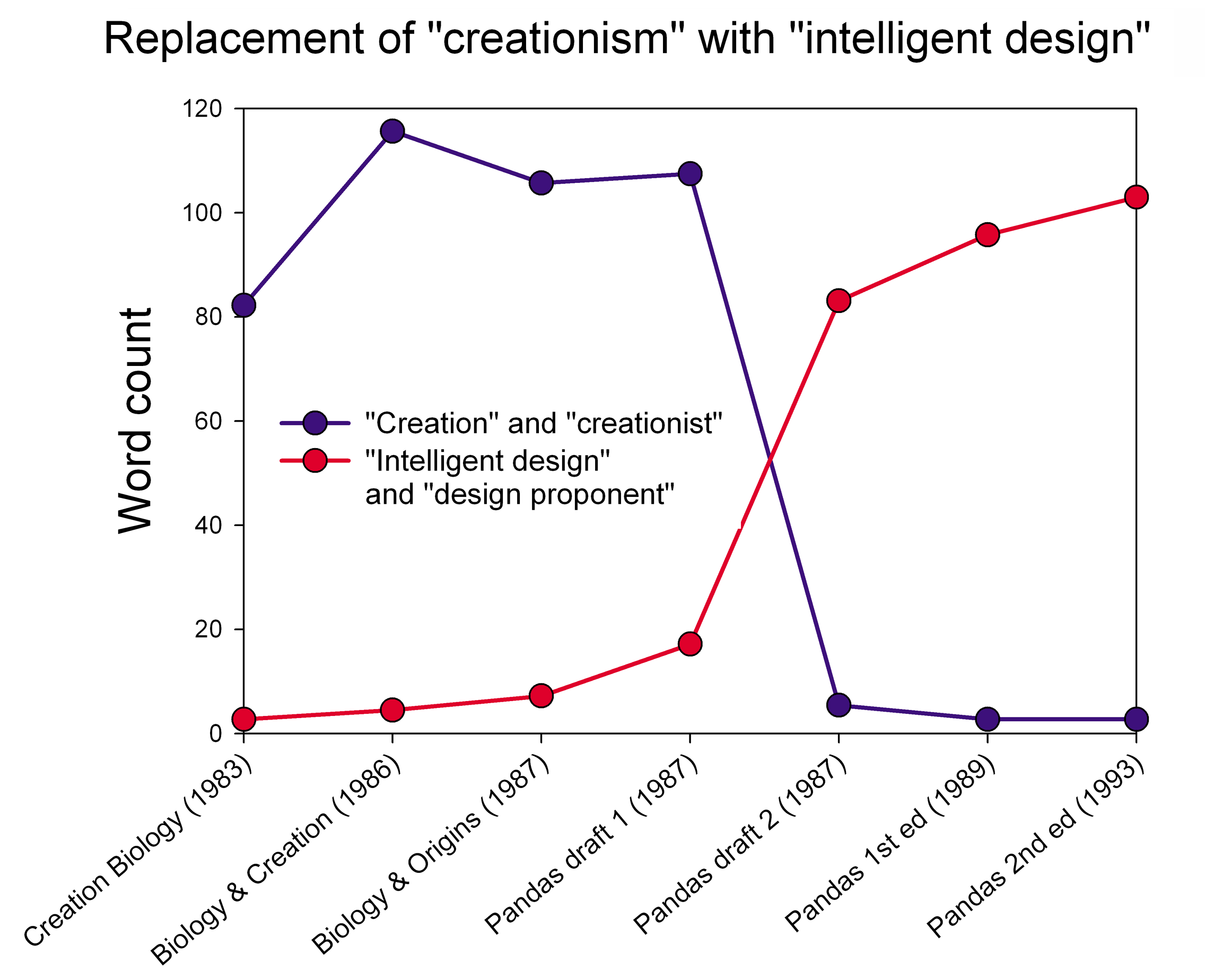
First of all: What is "Intelligent Design"? This so-called theory or proposition is the belief that "certain features of the universe and of living things are best explained by an intelligent cause, not an undirected process such as natural selection."(Discovery Institute, 2007) Lets look at the source of this quote. The Discovery Institute is an organization that advertises itself as program that "supports research by scientists and other scholars challenging various aspects of neo-Darwinian theory". This definition would inherently imply that Intelligent Design is a fact, as it "supports scientists", and "improves schools", but yet there seem to be some disagreement among the "enlightened community". To quote Henry M. Morris (Ph. D.) of the Institute for Creation Research, which advocates for both Intelligent Design and Creationism, "(Intelligent Design) is neo-creationism, a form of creationism restated in non-religious terms." This would seem to suggest that Intelligent Design is merely Creationism (the basis of how the world was created, based on the beliefs of there being an omnipotent God), rephrased; These "scientists" are really men of good faith, who have replaced the word "God" in their arguments with the self-introduced phrase "Intelligent Agent". Is is, as proclaimed by countless supporters, a science that "proves" (mono)theism.

So sticking with the same belief that Judge Jones, representing the United Stated Supreme Court, had in Kitzmiller v. Dover Area School District, which is that Intelligent Design is Creationism, rephrased (or replaced) to become legal and constitutional to teach in school, the question changes to: Can Creationism be scientifically proven? The simple answer to this is, no!

Lets look at this "theory". It states that God, or an "Intelligent Agent" designed some forms of life on Earth, therefore filling in the gaps left by the theory of Darwinian Evolution. Now while Evolution is just a theory, and not fact, there is loads of evidence to back it up. Should it be taught as a fact? That's different argument, but I'd like to point out that the theories of Gravity, Friction, and the spherical nature of the Earth are not fact either, despite them being taught so in schools.

So what is the "proof" that these Creationists/Intelligent Designers propose? The fact that some things in nature are "irreducibly complex", or impossible to have formed on their own as they would be useless. The example they focus on is the "living motor" of the bacterial flagellum, but it has already been proven that parts of this could have developed for a completely unrelated purpose. As well, the lack of an explanation for one thing does not disprove the theory of Evolution,and by the same token one questionable fact does by no means prove Intelligent Design. Their other bit of "proof"? The fact that some aspects of life work so perfectly, "they look like a creation of an 'Intelligent Agency'". However, the foundation of Darwin's Evolution disproves this, as those "designed" elements could easily be the work of Natural Selection, whereby the most useful or beneficial traits and mutations are passed on through generations of a species, and the detrimental ones die out.

Of course, there's no way to prove 100% that Intelligent Design is not scientific fact, but with our current technology and methods of researching, I believe that, just as we assume the quantum-mechanic theory to be fact, we can also assume Intelligent Design cannot be proved as fact. As well, the fact that we can prove almost all aspects of life have evolved from earlier, less complex aspects should be proof enough.

While I could go on forever listing reasons why Creationism and Intelligent Design cannot be proven through scientific fact, as there is no universal evidence, and the "facts" given can be scientifically disproved, I don't have that much time. To conclude: Evolution is a theory with many gaps, but much supporting evidence; to the contrary, Creationism (and therefore "Intelligent Design" has no scientific basis, is a product of religion, and as agreed upon by the US Supreme Court, not real science. So no, there is no way to scientifically prove the idea of "Intelligent Design".Yasyf Mohamedali