⇐ Yes, that is a pink banana. Welcome to the world of the unrelated. On a completely different note, let's talk about how not to get ripped off!
In today’s world of social networking, internet marketing, and borderline-addictive cell phone use, there is an extremely large issue plaguing us. This is, of course, the issue of rampant frauds and scams on the internet. Today, I'm hoping to give you a quick guide to see past all the rhetoric (and sometimes outright lying) that you see while casually surfing the interwebs. To begin, there are some prime examples of internet scams. For the latest an greatest of these rather amusing ploys, see here. A few personal favourites are: one starving, cancer-ailed Valentin Mikhailin, the guy stuck in the middle of nowhere that desperately needs a cab (but can still somehow email thousands of people), and the guys at Microsoft that decided they wanted to hack your computer.
Now the first piece of advice anyone can give, but yet seems to be the most ignored, is to use your common sense! Come on people, how many Nigerian Princes do you know that really want to throw millions of dollars at you for no particular reason? Or in that case, anyone who would do that! The golden rule is to remember: nothing in life is free. Make sure to analyze those emails carefully, and think if anyone would ever actually give you what they are claiming to. As well, think about it from a business perspective; how is this company benefiting or making money of this? If you notice a major discrepancy in this, such as being offered a large gift, and the only catch being you have to send a sum of money to them (they make a profit off this money, and you might not even get your ‘gift’), then be wary of scammers. Finally, remember that if it sounds to good to be true, it probably is.
Now the first piece of advice anyone can give, but yet seems to be the most ignored, is to use your common sense! Come on people, how many Nigerian Princes do you know that really want to throw millions of dollars at you for no particular reason? Or in that case, anyone who would do that! The golden rule is to remember: nothing in life is free. Make sure to analyze those emails carefully, and think if anyone would ever actually give you what they are claiming to. As well, think about it from a business perspective; how is this company benefiting or making money of this? If you notice a major discrepancy in this, such as being offered a large gift, and the only catch being you have to send a sum of money to them (they make a profit off this money, and you might not even get your ‘gift’), then be wary of scammers. Finally, remember that if it sounds to good to be true, it probably is.
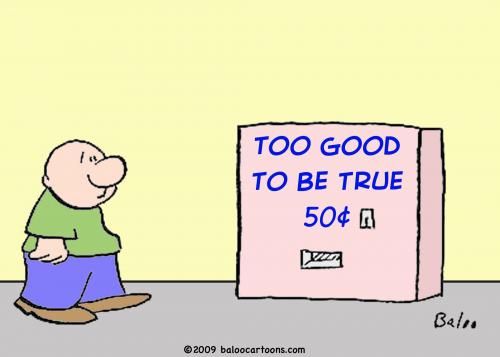
All of this covers those legal companies who deceive you into letting them make a large profit, but what about those who don't play by the rules (however vaguely)? This, Ladies and Gentlemen, is what you have to watch out for! There are some not-so-nice people out there who disregard the law and will do anything to earn a quick buck. The interesting thing about these people is that they tend to be people who have fallen for get-rich-quick schemes, are experienced, and now target people who are desperate for money. This is scary, as it means these perpetrators of fraud are really good at what they're doing! There are three main things you have to watch out for while going about your everyday lives to help with this.
The first is constant vigilance when making purchases online. Check that the site you are at is really the site it claims to be, and not some 'phishing' site that is trying to steal your credentials. As well, make sure you get to know your seller. Meet them in person (if possible) in a public location, such as a bank. If this is not possible, then do your research! Look at their history, ask for references, and make sure you get your deal in writing.If all else fails, it might be wise to look for an alternate, more credible buyer.
The second thing is to make sure you know the contact information of your local fraud authorities, for example the RCMP Fraud Department, or RECOL. If you feel like someone is scamming you, committing fraud, or otherwise breaking the law online, it is your responsibility to report it. Contrary to popular belief, the RCMP/Government/CIA is not some omniscient online being that can monitor anything and everything that happens. If you don't report it, nothing can be done, and you may be further endangering other people!
The third is to exercise your options! Almost all online commerce sites, such as eBay, offer buyer protection programs. Make sure you familiarize yourself with the company's policies, and how to file a complaint. Be sure to obtain all of this information before-hand, and consider using a middle-man service to ensure both parties get their fair share. And remember, if it seems too good to be true, it probably is, and there are always lots of other options.